
Yale University Press • Published 2015
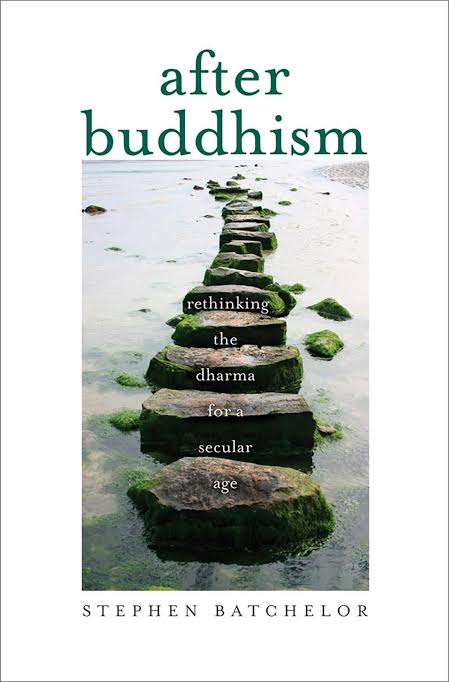
After Buddhism
Rethinking the Dharma for a Secular Age
Synopsis
What remains alive in a religious tradition when its metaphysical formulations are no longer self-evident to some of its practitioners? In After Buddhism, Stephen Batchelor proposes returning to the earliest Buddhist sources to reconstruct the dharma as an ethical, reflective, and contemplative practice capable of engaging with secular societies. His aim is neither to abolish tradition nor to reduce it to a wellness technique, but to question the historical processes through which certain doctrines came to be presented as untouchable truths.
The investigation begins with a hermeneutic difficulty: teachings attributed to the Buddha were preserved, arranged, and interpreted by communities living in different times. Batchelor examines ancient texts without assuming that they transparently preserve an uncontaminated original voice. Through narrative reconstructions of people close to Gotama and critical readings of canonical passages, he seeks to recover a figure embedded in political conflicts, personal relationships, and concrete human dilemmas rather than an authority detached from history.
In this interpretation, spiritual practice need not depend on an unquestioning acceptance of a cosmology of rebirth, supernatural realms, or predestined fates. Batchelor shifts the emphasis toward vulnerability as lived experience, attention to conduct, recognition of reactive habits, and the search for responsible responses to suffering. Awakening appears less as the possession of final certainty than as an ongoing effort to shape the way one lives with others.
The author does not conceal his own path through Tibetan, Zen, and Theravada traditions, nor does he present his reading as the only legitimate reconstruction of Buddhism. His proposal enters an open discussion with schools, practitioners, and scholars who interpret the texts and the role of doctrine differently. This tension is what makes the book intellectually compelling: it prompts us to ask which criteria we employ to distinguish fidelity, transformation, and invention within a spiritual tradition.
After Buddhism is especially pertinent to readers interested in the coexistence of contemplative practices and critical thought. Against the choice between dogmatic adherence and the abandonment of every religious inheritance, Batchelor explores a third possibility: understanding the dharma as a set of ethical and existential tasks that can be revised, debated, and tested in ordinary life. The question he leaves open is not whether Buddhism is over, but what it might yet become.
Book details
- Author
- Stephen Batchelor
- ISBN
- 9780300205183
- Year
- 2015
- Publisher
- Yale University Press
- Country of publication
- Estados Unidos
- Format
- Tapa dura
- Edition
- Primera edición inglesa (tapa dura)