
The MIT Press • Published 1991
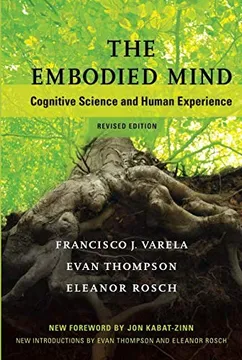
The Embodied Mind
Cognitive Science and Human Experience
Synopsis
What if the task of cognitive science were not merely to explain how the brain processes information, but to understand why that processing is always an experience lived by someone? The Embodied Mind begins with this divide between the scientific description of mind and first-person life. Francisco Varela, Evan Thompson, and Eleanor Rosch argue that an adequate theory of knowledge must avoid both subjectivism without empirical scrutiny and the reduction of consciousness to a mechanism observed from the outside.
Their inquiry examines the assumptions of classical cognitivism, which understands the mind in terms of operations on symbolic representations, and of connectionist alternatives, which attend to the emergence of global patterns from distributed interactions. Without denying their importance, the authors maintain that neither approach exhausts the question of what it means to know. The organism is not a passive spectator of a pregiven world: its bodily history, activity, and couplings with the environment help shape what it can experience as a world.
From this emerges enaction, a research program that locates cognition in the dynamic relationship between body and environment. Phenomenology and Buddhist contemplative psychology enter the discussion not as exotic additions but as traditions capable of disciplining the observation of experience. Mindfulness, the instability of the self, and the interdependent nature of phenomena become philosophical interlocutors of neuroscience, without erasing the distinctions between empirical inquiry and meditative practice.
The book's radical move lies in shifting the starting point: the mind would not be a thing housed within the confines of the brain but an embodied, situated, and transformable activity. Published in 1991 and revised decades later, it opened an enduring conversation about self-awareness, subjectivity, perception, and the limits of representation. Its proposal does not bring the explanation of consciousness to a close; it demands that science acknowledge what it leaves out when it forgets the subject who knows.
Purchase link coming soon
Book details
- Author
- Eleanor Rosch, Evan Thompson, Francisco J. Varela
- ISBN
- 9780262220422
- Year
- 1991
- Publisher
- The MIT Press
- Country of publication
- Estados Unidos
- Format
- Tapa dura, 328 páginas
- Edition
- Primera edición inglesa, 1991
Keep reading
View all ↗