
University of Minnesota Press • Published 1988
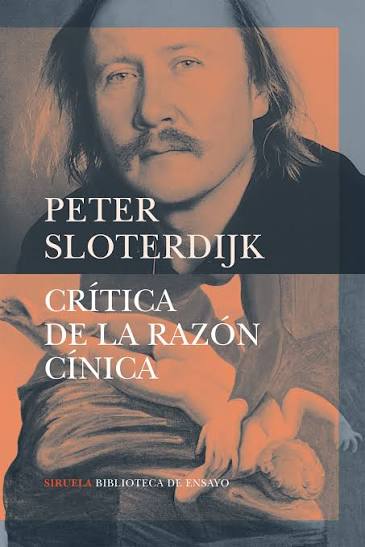
Critique of Cynical Reason
Alternative title: Kritik der zynischen Vernunft
Synopsis
Modern consciousness no longer needs to believe fully in its own justifications in order to continue obeying them. This unsettling insight is the diagnosis of an age that Peter Sloterdijk develops in Critique of Cynical Reason, published in Germany in 1983, two hundred years after Kant’s Critique of Pure Reason. The book identifies a form of subjectivity that recognizes the shortcomings of ideologies, acknowledges the vested interests behind many discourses, and nevertheless continues to act within the very mechanisms it denounces.
Sloterdijk calls this stance “enlightened false consciousness.” Its problem is not simply ignorance that further enlightenment might dispel: the participant in contemporary cynicism often knows too much. Such a person can recognize deception, anticipate its consequences, and even make ironic remarks about it, without that knowledge becoming transformative practice. Traditional ideology critique thus encounters a difficult adversary: a consciousness that has incorporated denunciation into its very capacity to adapt.
Against this accommodating cynicism, the author sets ancient Cynicism, or kynicism, associated with Diogenes: a bodily, satirical, existential insolence that confronts power through disobedience and laughter. To investigate this opposition, he ranges across the history of ideas, politics, sexuality, medicine, religion, and the institutional uses of knowledge. His style combines philosophical essay, historical scenes, humor, and invective, as though a theory of cynical life required an escape from the solemn tone of systematic philosophy.
The Weimar Republic provides a decisive historical laboratory for this investigation. Through its cultural and political tensions, Sloterdijk explores the exhaustion of the Enlightenment’s emancipatory ideal and its possible authoritarian transformations. The result is not a manual for overcoming hypocrisy but an uncomfortable question about the relationship between lucidity and responsibility: what is the value of knowing that something is false or unjust when such knowledge no longer changes how one lives?
Book details
- Author
- Peter Sloterdijk
- ISBN
- 9780816615865
- Year
- 1988
- Publisher
- University of Minnesota Press
- Country of publication
- Estados Unidos
- Translation
- Michael Eldred
- Format
- Tapa blanda, 600 páginas
- Edition
- Traducción inglesa, Theory and History of Literature
Keep reading
View all ↗