
Biography
Eric Hobsbawm (1917–2012) was a British historian born in Alexandria, Egypt, and a leading figure in twentieth-century Marxist historiography. Educated at the University of Cambridge, he spent much of his teaching and research career at Birkbeck, University of London. His work brought together social history, political economy and the study of popular movements, paying particular attention to the transformations of modern societies.
His interpretation of the ‘long nineteenth century’ unfolded in The Age of Revolution (1962), The Age of Capital (1975) and The Age of Empire (1987), followed by The Age of Extremes (1994), devoted to the ‘short twentieth century’. He also studied peasant rebellions, social banditry and the construction of national identities, among other subjects. His research helped renew the understanding of relationships between economic processes, collective experiences and forms of historical consciousness.
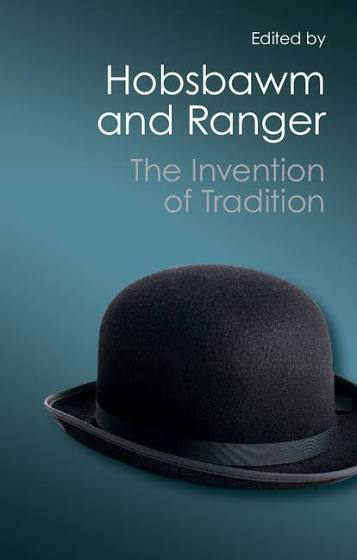
With Terence Ranger, he edited The Invention of Tradition (1983), a collective work examining how certain practices presented as ancient are developed or institutionalised in relatively recent historical contexts. This concept became an important tool for studying rituals, nationalisms, political symbols and processes of legitimation. Hobsbawm combined academic research with active participation in the intellectual debates of his time.
Published books