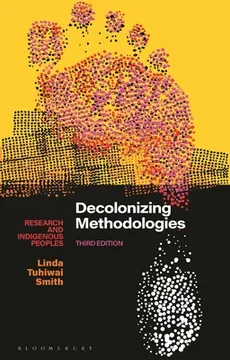
Zed Books / University of Otago Press • Published 1999
Decolonizing Methodologies
Research and Indigenous Peoples
Synopsis
Can research claim to be neutral when its questions, categories, and findings are embedded in a history of conquest? Linda Tuhiwai Smith, a Māori intellectual, turns this concern into the central problem of Decolonizing Methodologies. She does not merely criticize the prejudices of particular researchers: she examines the structural relationship between academic knowledge, imperialism, and the procedures through which Europe and its institutions defined what should count as true, civilized, legitimate, or worthy of study.
The book revisits the history of Western research from the experience of Indigenous peoples. Voyages of exploration, racial classifications, archives, museums, anthropological narratives, and administrative projects emerge as practices that could turn living populations into objects of knowledge without recognizing them as subjects who produce theory. The question of who observes is inseparable from who formulates the questions, who keeps the materials, who interprets the answers, and who benefits from the outcome. Unequal relations of authorization and extraction can persist beneath the apparent universality of a method.
Yet the essay's originality lies not only in exposing that genealogy. Its second dimension is affirmative: research can become a practice of self-determination when Indigenous communities participate in setting agendas, priorities, procedures, and criteria of validity. Smith considers struggles over memory, language, and territory alongside efforts to recover their own forms of knowledge and rebuild connections between research and collective responsibility. The kaupapa Māori tradition occupies an important place here as a situated experience of methodological and political transformation.
Decolonizing research does not mean replacing every demand for justification with a closed identity, nor declaring invalid all knowledge produced outside Indigenous communities. It means scrutinizing the historical conditions that conferred unilateral authority on particular institutions and opening scientific practice to relationships of reciprocity, recognition, and community control. The question is not only how we describe others, but by what right we do so and for whose benefit.
First published in 1999, the book initiated a lasting conversation among anthropology, education, postcolonial thought, and collective rights. Later editions added discussions and materials, making it essential to identify precisely which edition is cited. Its argument retains a distinctive intellectual power: it compels us to understand knowledge production as a social relationship with concrete responsibilities, rather than merely an abstract set of techniques.
Book details
- Author
- Linda Tuhiwai Smith
- ISBN
- 9781856496247
- Year
- 1999
- Publisher
- Zed Books / University of Otago Press
- Country of publication
- Reino Unido / Nueva Zelanda
- Format
- Tapa blanda; 208 páginas
- Edition
- Primera edición inglesa, 1999