
Cambridge University Press • Published 2015
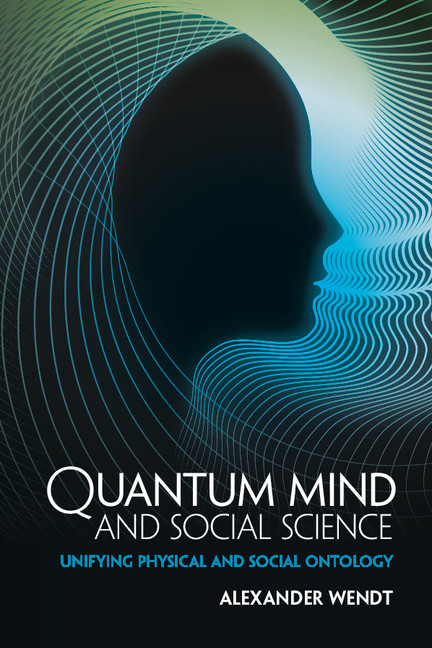
Quantum Mind and Social Science
Unifying Physical and Social Ontology
Synopsis
What if the problem facing the social sciences began well before questions of method, in the very idea of what exists? In Quantum Mind and Social Science, Alexander Wendt challenges the assumption that consciousness, human action, and social facts can be fully understood through the classical image of a universe made up of separate objects and mechanical chains of causation. Against that premise, he advances a deliberately controversial thesis: consciousness may be a macroscopic quantum phenomenon, and that possibility would require a reconsideration of the foundations of social ontology.
The inquiry moves from an introduction to the conceptual problems of quantum mechanics and its interpretations to debates over the mind–body relationship. Wendt examines quantum-brain models, panpsychism, neutral monism, and quantum cognition to explore how intentionality, subjective experience, and human agency might be conceived without reducing them to the operations of a classical machine. His proposal is not simply to import a scientific metaphor into sociology: it seeks to establish an ontological continuity between the physical world, the mind, and social life.
In the second half of the book, this hypothesis is extended to language, shared meaning, and the classic relationship between agents and structures. If subjects are not wholly isolated entities, how should we understand the emergence of institutions, norms, and collective identities? Wendt offers a tentative answer that challenges the separation between individual and society and raises new questions about the formation of what is shared.
The boldness of the argument demands an epistemological caveat: a quantum explanation of consciousness is neither an established empirical finding nor a consensus position in neuroscience. It is a philosophical and interdisciplinary construction that remains open to physical, methodological, and conceptual objections. This is precisely what makes the 2015 book distinctive: its willingness to risk a radical reorganization of the vocabulary through which the social sciences describe reality.
Book details
- Author
- Alexander Wendt
- ISBN
- 9781107442924
- Year
- 2015
- Publisher
- Cambridge University Press
- Country of publication
- Reino Unido
- Format
- Tapa blanda (paperback)
- Edition
- Edición inglesa en tapa blanda, 2015
Keep reading
View all ↗