
Duke University Press • Published 2013
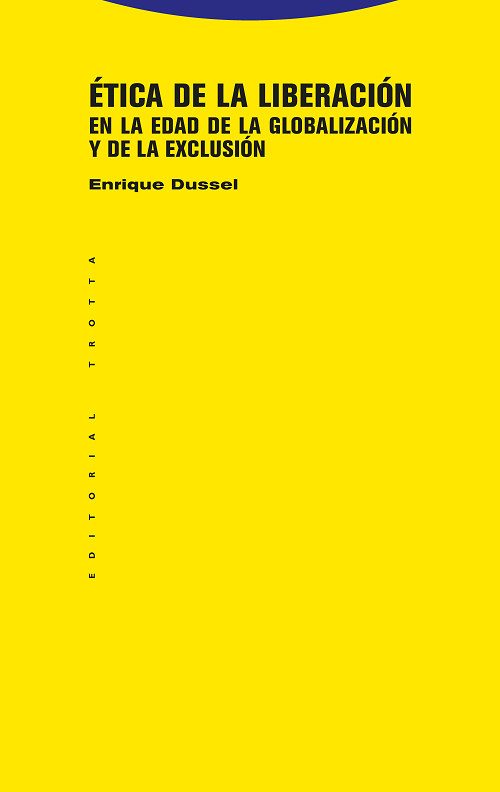
Ethics of Liberation: In the Age of Globalization and Exclusion
Synopsis
Can an ethics lay claim to universality when the historical order that proclaims it excludes a significant part of humanity from its benefits? Enrique Dussel responds by shifting the standpoint from which moral reflection begins. In Ethics of Liberation in the Age of Globalization and Exclusion, published in 1998, the fundamental question arises not from an abstract subject but from the vulnerable, embodied existence of those who endure hunger, violence, domination, or conditions that prevent human life from flourishing.
The work opens with a historical reconstruction that rejects the presentation of the European philosophical tradition as the sole legitimate trajectory of ethical reason. Modernity is situated within a world-system shaped by relations between center and periphery, accumulation and exclusion. From this perspective, Dussel examines the major modern moral systems: he engages critically with Kant, Rawls, Apel, and Habermas while drawing on Marx, Lévinas, and critical theory to interrogate what formal constructions tend to leave out.
His proposal articulates a decisive material imperative: to produce, reproduce, and develop human life in community. This principle does not eliminate the need for argumentation, intersubjective validity, and feasibility; on the contrary, it demands that they be brought together in institutions and practices capable of responding to concrete historical needs. An order’s legitimacy cannot be assessed solely by the coherence of its procedures if its consequences produce victims.
The second part develops an ethical critique from the standpoint of those excluded from prevailing consensuses. The emergence of the victim is not a sentimental device but a rational and practical challenge to the system that naturalizes suffering. Ethics thus extends into a praxis of liberation: the construction of alternatives, collective responsibility, and the possible transformation of oppressive structures.
The book’s distinctiveness lies in contesting the very meaning of the universal. Faced with the Eurocentric claim to speak for everyone, Dussel does not abandon universality; he seeks to reconstruct it from concrete human life and from the voices of those whom the dominant order has pushed to its margins.
Book details
- Author
- Enrique Dussel
- ISBN
- 9780822352129
- Year
- 2013
- Publisher
- Duke University Press
- Country of publication
- Estados Unidos
- Translation
- Nelson Maldonado-Torres; Eduardo Mendieta; Yolanda Angulo; Camilo Pérez-Bustillo
- Format
- Tapa blanda, 752 páginas
- Edition
- Traducción inglesa editada por Alejandro A. Vallega
Keep reading
View all ↗